I know launching or scaling a private‑label beer can feel risky — tight margins, contract brewers with limited capacity, and regulatory headaches. This guide on 2025 private label beer retailers gives a concise, data-driven playbook to reduce that risk and boost margin.
Market snapshot: why 2025 favors private‑label beer
Retailers have a clear tailwind: private‑label sales grew 4% in 2024 to $271 billion, and a PDG Insights survey found 40% of consumers bought more private‑label products in 2025 than a year earlier. Rabobank’s senior beverage analyst notes demand for “quality at reasonable prices” and craft production pullbacks have made the category “more ripe” for private label than ever. Practically, that means value-oriented lagers and locally resonant styles can win shelf space and margin without trying to outspend national brands on marketing.
Transition: with demand shifting, here are who’s already proving the model works.
Who’s doing it now — proven retailer cases
Stewart’s Shops (about 400 convenience stores) relaunched Mountain Brew, brewed by Paradox Brewery; initial demand more than doubled expectations. Price points offer a clear value cue: a 19.2‑ounce can at $2.19 and a two‑pack for $4. Costco partnered with Deschutes to produce Kirkland‑branded beers (helles lager and a barrel‑aged stout). Walmart has filings suggesting a contracted line reported as “Brewmasters” in TTB records. These examples show two viable approaches: partner with a respected craft brewer for credibility, or scale value SKUs through high‑volume contract production.
Two line breaks before and after the table.
| Retailer | Private‑label example | Partner / Notes | Pricing / Result |
|---|---|---|---|
| Costco | Kirkland beers | Deschutes Brewery (contract) | Helles & barrel‑aged stout; positioned as premium value |
| Walmart | Reported “Brewmasters” line | TTB filings indicate mainstream‑style labels | Scaling approach under development |
| Stewart’s Shops | Mountain Brew | Paradox Brewery; recipe tested in tasting room | 19.2‑oz can $2.19; two‑pack $4; demand doubled expectations |
Two line breaks before and after the table.
Transition: knowing who’s active helps shape assortment strategy.
Assortment, pricing and merchandising playbook
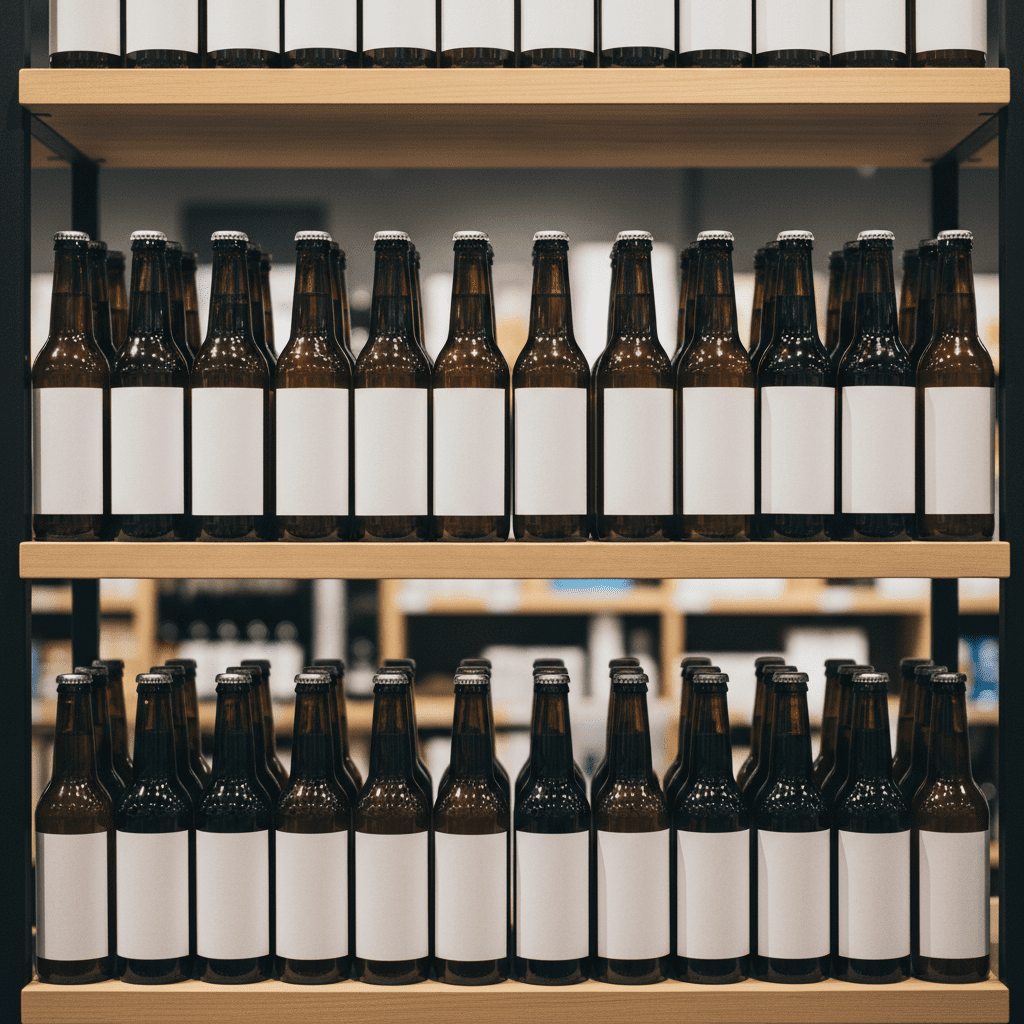
Assortments that mirror your shopper profile perform best. For mass and convenience channels, light adjunct lagers or familiar local styles generally outsell niche craft variants. Pricing should be simple and value‑forward: single‑can price cues and straightforward multipack offers encourage trial and repeat purchase. Margin uplift often comes less from undercutting national brands and more from SKU rationalization, pack simplification, and focused in‑store messaging.
Key tactical rules:
- Match style to channel: value lagers for convenience/mass; limited‑release or collaborative ales for destination grocery.
- Keep packaging clear and differentiated: own‑brand recognition plus local cues builds trust.
- Use modest, targeted support (in‑store sampling, regional social promotion) rather than national ad battles.
Transition: to execute this, you need reliable production partners.
Sourcing and contract‑brewing: how to secure scalable supply
Capacity availability is a major enabler in 2025 — some craft brewers have tank time and are open to private‑label contracts. Successful sourcing prioritizes partners with proven scale, pilot capability, and logistics experience. Paradox’s approach — testing recipes in a tasting room, then locking in additional tanks — is a useful template.
Two line breaks before and after the list.
- Prioritize brewers with incremental tank capacity and a track record of consistent runs.
- Pilot recipes in small batches and in‑market taste tests before scaling.
- Secure contingency suppliers and contract clauses for peak‑week volume and quality guarantees.
- Negotiate packaging runs and co‑packing lead times up front, and build forecasts into supplier commitments.
Two line breaks before and after the list.
Transition: these operational steps intersect with regulatory and transparency trends you must watch.
Regulatory and ownership‑disclosure trends that affect launches
Regulatory momentum is increasingly focused on ownership disclosure and label transparency. Recent reviews (for example, led by Dr. Craig Emerson in Australia) led major retailers to commit to clearer brand ownership on labels: Endeavour Group agreed to update Pinnacle labels and Coles committed to adding “Liquorland” to own‑brand alcohol labels by January 2027. The same review noted high market concentration — Endeavour and Coles control roughly 60% of wine retail, rising to about 80% with Aldi and Metcash — and recommended measures like requiring major retailers to supply sales data to small suppliers. Independent industry groups are pressing for full ownership disclosure, including craft brands owned by multinationals.
Implications for buying managers:
- Expect tighter scrutiny and potential disclosure requirements in other markets; build legal review and label update timelines into your launch plan.
- Be prepared to share certain sales data with suppliers or accommodate regulator requests.
- Transparent ownership and clear messaging can protect brand equity and consumer trust, especially for “craft‑style” private‑label lines.
Transition: now combine sourcing and regulatory readiness into operational readiness and forecasting.
Operational readiness: forecasting, SKU rationalization and logistics
Forecast conservatively for first 12 weeks and plan capacity buffers for promotional periods. SKU rationalization drives margin: fewer, well‑priced SKUs reduce complexity and improve turn. Align pack formats to channel — single cans and small multipacks for c‑stores; 12‑packs and value packs for supermarkets.
Practical checkpoints for launch:
- Finalize contract capacity and backup suppliers before label approvals begin.
- Schedule packaging and distribution runs based on conservative sell‑through assumptions.
- Integrate TTB or local alcohol label review timelines (these can add weeks) into project plans.
- Monitor in‑market performance and be ready to allocate additional tank time for fast movers (Stewart’s doubled expectations after launch).
Transition: pull these threads together into a short, actionable conclusion.
Conclusion
2025 private label beer retailers face an unusually favorable window: consumer appetite for value, excess brewer capacity, and active retailer experimentation all lower the entry barrier. Data points to act on immediately: private‑label sales growth (4% to $271 billion in 2024), 40% of consumers buying more private‑label in 2025, and high‑impact case studies (Costco‑Deschutes, Walmart filings, Stewart’s success with Mountain Brew). To win, align assortment to shopper needs, secure scalable contract partners with contingency plans, simplify pricing and packs, and embed label and ownership disclosure into your launch timeline. Do these things and you’ll reduce execution risk while capturing margin and differentiation in a changing beer aisle.