I know choosing a deli substitute can feel risky — Prime Roots plant-based deli meat alternatives promise familiar flavor and cleaner labels while tackling sustainability and allergen concerns.
Overview: what Prime Roots offers
Prime Roots, founded in 2017 by Kimberlie Le, makes koji-based mycelium deli slices that aim to replicate ham, turkey and salami in retail and foodservice settings. The brand positions itself for flexitarians, omnivores, vegetarians and vegans who want convenient, protein-rich deli options that behave like traditional slices in sandwiches and platters. After a $30 million Series B announced May 15, 2023 (part of more than $50 million raised to date), the company is expanding beyond its initial footprint and planning wider deli-counter and restaurant distribution through 2025 and 2026.
Smooth transition: knowing the company background helps explain the ingredient choices and label claims below.
Ingredients, processing and nutrition highlights
Prime Roots uses koji-based mycelium — a fermentation-derived microprotein — as the core ingredient. Koji contributes natural umami, reducing the need for many flavor additives. The brand markets its deli slices as free from nitrates, preservatives and cholesterol, and labels products soy-free and wheat-free to address common allergen worries. Prime Roots also claims lower sodium than leading vegan brands, an important point for buyers sensitive to processing-related sodium levels.
Key production and sustainability facts are concise and practical:
| Founding / Leadership | 2017; CEO & co-founder Kimberlie Le |
|---|---|
| Funding | $30M Series B (May 15, 2023); total >$50M |
| Core tech | Koji-based mycelium protein (fermentation) |
| Production time | 3 to 5 days (vs much longer for conventional meat) |
| Sustainability | Lifecycle assessment: ~89–92% lower emissions and land use vs conventional meat |
| Certifications | B-Corp certified |
This matters because fermentation-based mycelium production can cut both environmental impact and turnaround time, while offering a shorter, more recognizable ingredient list for label-conscious shoppers.
Taste and texture — what to expect
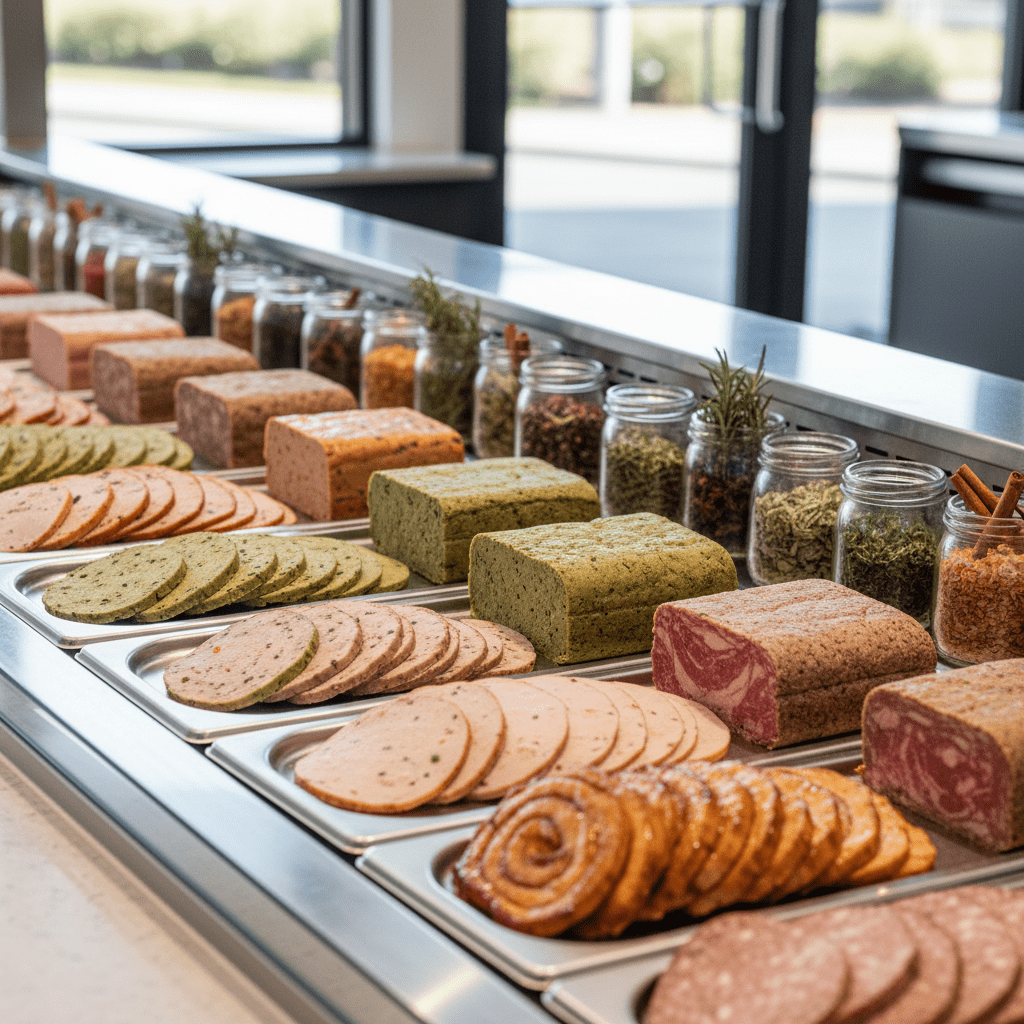
Prime Roots intentionally developed product profiles to match familiar deli flavors. The company collaborated with chefs to produce varieties such as cracked pepper turkey, black forest ham, hickory bacon, salami and pepperoni. Expect the following general profiles:
- Ham/turkey-style slices: lighter smokiness, salty-savory umami that performs well in sandwiches and cold plates.
- Cured/seasoned slices (salami, pepperoni): stronger spice, pepper and fat-like mouthfeel to mimic traditional charcuterie.
In practice, the slices are not 100 percent identical to animal deli meat in every bite, but many home cooks report the difference becomes minimal when used in layered sandwiches, melts or on pizza. The koji imparts a natural savory backbone that helps the slices deliver a “meaty” mouthfeel without extra artificial flavors.
Allergens, sodium and processing concerns
Prime Roots addresses common pain points directly: products are promoted as soy-free and wheat-free, and the short, pronounceable ingredient list is designed to reduce surprises for sensitive eaters. The company states its formulations are nitrate- and preservative-free and contain no cholesterol. Still, buyers should check nutrition labels for exact sodium and other values before purchase, since “lower sodium than leading vegan brands” is a comparative claim rather than a guaranteed number across all SKUs.
Practical benefit: if you worry about allergens or nitrites, Prime Roots’ labeling and ingredient approach reduces the number of common triggers and additives to watch for.
Availability and pricing expectations
Prime Roots products are currently available in about 18 states, with a 50/50 growth strategy across foodservice and retail to speed national availability. The brand is working with grocery chains, deli counters, quick-service restaurants and other operators so the slices can be a one-to-one swap in existing equipment.
Price note: expect a premium versus conventional deli meat and many mass-market plant-based slices at first. The advantages—clean labels, mycelium technology and sustainability—tend to carry higher production costs, so compare price per ounce and local availability when deciding whether to replace your usual deli meat.
Quick serving and recipe ideas
To help bridge the “what do I make with this?” gap, here are simple, practical uses that highlight texture and flavor:
- Classic deli sandwich: layered cracked pepper turkey, avocado, lettuce, mustard on whole-grain bread.
- Charcuterie-style platter: thinly sliced salami or pepperoni with pickles, nuts and fruit for snacking.
- Warm applications: sear slices briefly and add to grilled cheese, pizza toppings or folded into scrambled eggs.
These methods leverage the koji umami and the product’s ability to handle light cooking without falling apart.
How Prime Roots compares to other options
Compare across these buyer priorities:
- Taste/Texture: Strong for sandwich and pizza use; closer to deli when layered or warmed, with distinct spice profiles by SKU.
- Nutrition & processing: Fermentation-based mycelium has a shorter ingredient list and avoids nitrates and cholesterol, but check labels for sodium and additives.
- Allergens: Many SKUs are soy- and wheat-free—an advantage over some competitors that rely on soy or wheat proteins.
- Sustainability: Third-party lifecycle assessments indicate roughly 89–92 percent lower emissions and land use than conventional meat, a clear environmental benefit.
- Availability & price: Presently limited regionally (18 states) and typically priced at a premium; rollout to delis and restaurants is ongoing.
Smooth transition into conclusion: weighing these factors against your priorities will help decide whether to swap in Prime Roots as your everyday deli solution or reserve it for specific uses.
Conclusion
Prime Roots plant-based deli meat alternatives offer a compelling mix of flavor-forward slices, cleaner labels and strong sustainability credentials thanks to koji-based mycelium protein and efficient fermentation. For health-conscious flexitarians and home cooks seeking convenient, protein-rich deli substitutes, the brand addresses key pain points—taste, allergen transparency and environmental impact—while you should still verify sodium and price at purchase. If your priorities are cleaner ingredients and lower environmental footprint and you’re willing to pay a bit more for deli-like convenience, Prime Roots is worth trying in sandwiches, charcuterie boards and quick warm dishes.