Cargill investment Colorado beef plant: For Fort Morgan ranchers and council members, this update summarizes what Cargill announced, what remains unknown, and the practical next steps to protect local jobs, permits and community interests.
What Cargill announced about the Fort Morgan site
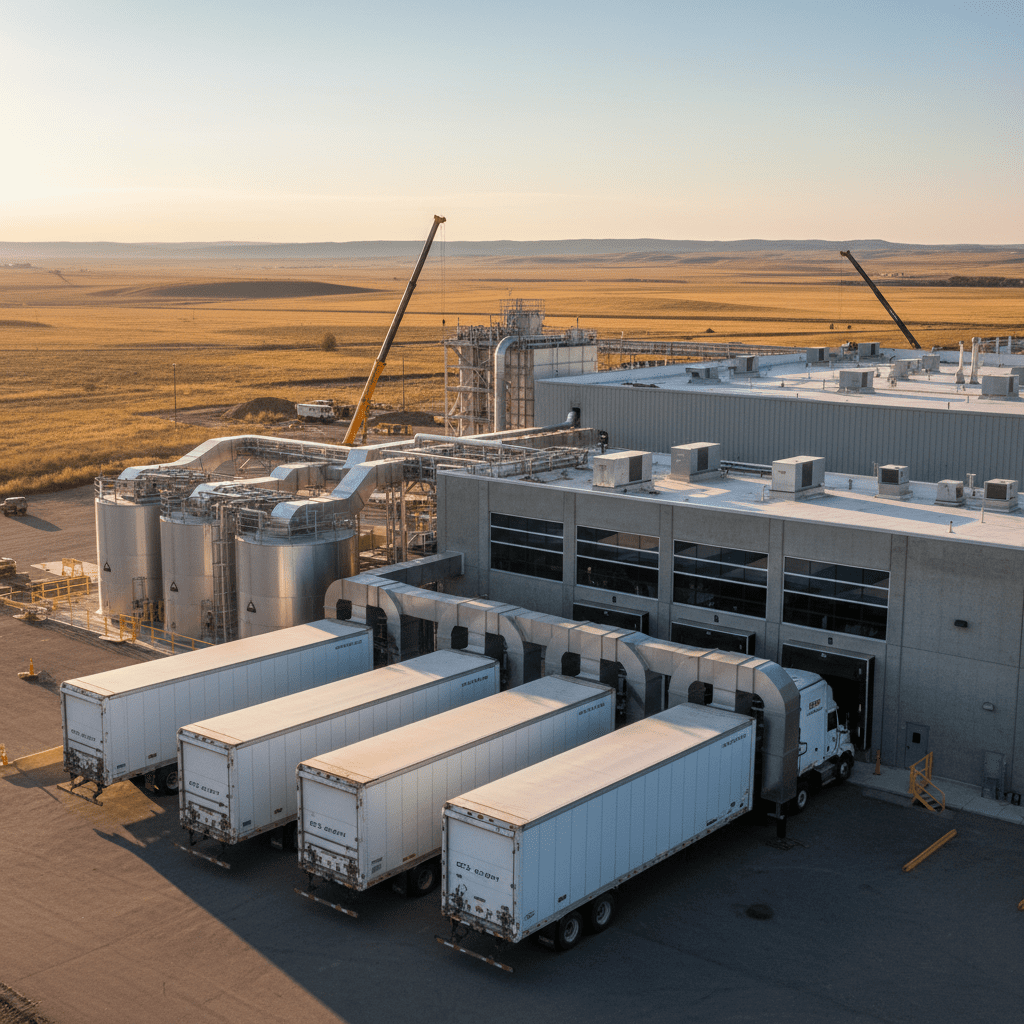
Cargill says it completed a renovation at its Fort Morgan, Colorado beef processing plant and is continuing investment under its "Factory of the Future" initiative. Key, confirmed points:
- Nearly $90 million is being deployed for automation and smart technology upgrades, rolled out “over the next several years.” Prior to this round, the Fort Morgan site received about $24 million in technology upgrades since 2021.
- Central technology: CarVe, Cargill’s patent-pending computer vision system that measures red-meat yield in real time to improve cutting accuracy, reduce waste and increase throughput efficiency. A ribbon-cutting for the Fort Morgan project occurred on December 2 (year not specified in the release).
- Community investments tied to the project include a $40 million workforce housing development (completed townhomes plus an upcoming 81-unit apartment complex) and over $500,000 in community grants for childcare and housing supports; Cargill frames these moves as efforts to stabilize the local workforce.
Transition: Knowing the announced pieces helps, but many operational and community-impact metrics remain unspecified — important to ranchers and town officials.
What the announcement did not specify (major gaps)
Cargill’s release includes technology, timing language and community grants but leaves critical local-impact questions open. The following items were explicitly not provided in the source and are priorities for verification:
| Metric | Status in announcement |
|---|---|
| Total investment amount (clarified) | Reported as nearly $90 million for current automation upgrades |
| Number of jobs created or retained | Not specified |
| Plant throughput / production capacity (heads/day or lbs/day) | Not specified |
| Permit approvals, environmental review status, traffic studies | Not specified |
| Contract implications for cattle suppliers and pricing | Not specified |
Transition: With those unknowns in mind, evaluate likely impacts and immediate concerns for local stakeholders.
What this likely means for ranchers and the local community
- Operational benefits Cargill highlights: automation and CarVe can increase yield per carcass, reduce waste and improve worker safety—benefits that, if realized, could stabilize or improve packer-level margins and potentially reduce lost product. Improved efficiency can shorten processing time per carcass, but without capacity figures it’s unclear whether plant throughput will increase materially.
- Workforce and local economy: the housing investments and community grants suggest Cargill expects to secure a more stable labor pool. That can reduce turnover and workforce shortages that affect local payroll and service businesses. However, the announcement did not quantify job creation or retention, so the net employment effect is uncertain.
- Supply-chain and pricing implications: broader industry context matters. The release notes competitor moves such as Tyson Foods’ closure of its Lexington, Nebraska plant (about 2,500 jobs) and shift to a single full-capacity shift at its Amarillo, Texas plant—changes that can tighten regional slaughter capacity and influence cattle basis and negotiated prices. Without clarified headcount or throughput at Fort Morgan, ranchers cannot yet measure how their local bargaining power or contract availability may shift.
- Environmental, traffic and property concerns: automation and higher throughput, if implemented, can increase truck traffic, water use and wastewater generation. The release did not reference environmental reviews, permit approvals or traffic studies—items local officials should expect to see before long-range operational changes are finalized.
Transition: Given that mix of potential upsides and persistent unknowns, town councils and ranchers need concrete next steps to close information gaps.
Practical next steps for Emma and local officials
- Request and document specifics from Cargill and permitting authorities: ask Cargill for expected jobs (created and retained), shifts/lines planned, projected daily throughput and any projected contract changes for area suppliers. Simultaneously, request copies of permit applications, environmental assessments and traffic studies from county and state permitting offices.
- Coordinate with regulatory agencies and inspection bodies: confirm USDA inspection arrangements and what changes, if any, the upgrades require in inspection scope. Ask public health and water authorities about anticipated water use and wastewater treatment plans associated with the upgraded operations.
- Negotiate community protections and benefits: use the housing and grant commitments as leverage to seek explicit guarantees on local hiring targets, apprenticeship or training programs, traffic mitigation measures, and monitoring/reporting commitments (e.g., annual environmental or traffic impact reports).
Transition: These actions help convert the announced technology and housing investments into measurable community benefit and accountability.
Conclusion
Cargill’s Fort Morgan announcement delivers a clear technology and community investment narrative—nearly $90 million in automation, the CarVe vision system, a ribbon-cutting on December 2 and substantial workforce-housing support—yet leaves key metrics unreported. For Emma and other local stakeholders, the priorities are straightforward: secure verified numbers on jobs and throughput, obtain permit and environmental documentation, and convert community investments into enforceable local benefits. Doing so will reduce uncertainty around cattle contracts, environmental impacts, traffic and property-value concerns and will make the announced investment actionable for ranchers and town decision-makers.