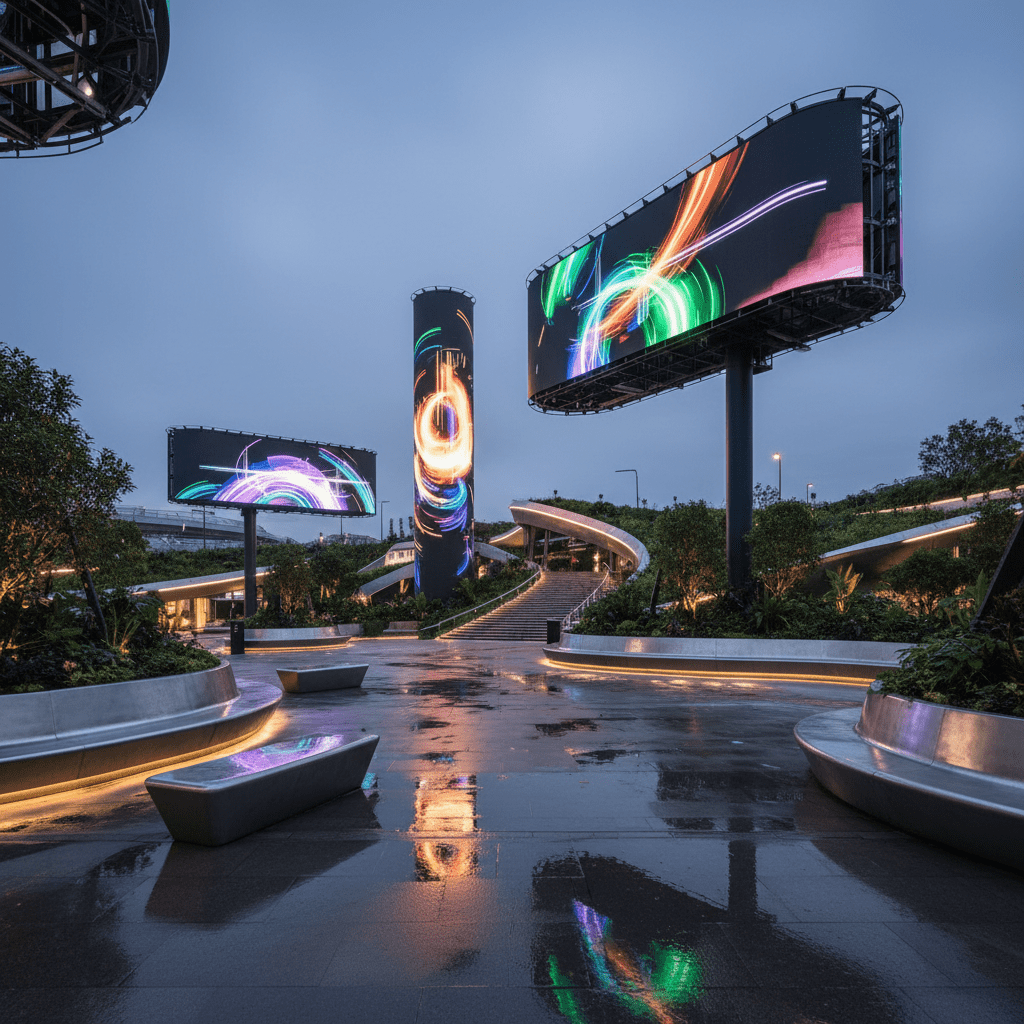
interactive DOOH fan zones drive consumer consideration and measurable action when brands plan for moments, measurement and modular creative. This guide gives practical KPIs, buying tactics and case-proven activations to help you deliver ROI on a tight timeline and budget.
Why interactive DOOH fan zones work (and why now)
As of January 20, 2026, live sports events — including the 2026 FIFA World Cup across Canada, the United States and Mexico — are drawing more than five million attendees and creating concentrated opportunities for DOOH impact. Independent and commissioned studies consistently show OOH and fan-zone formats convert attention into action: nearly six in ten fans recall seeing OOH around major events, and more than 90% of people who see OOH take a follow-up action. Ocean Outdoor’s research during recent global events adds that official fan zones significantly increase appeal (60% said official status matters), build trust (77% reported increased trust after interactions), and deliver strong dwell and spend (two-hour average dwell and about £35 spend per visit).
For a mid-level brand marketer or OOH planner, that translates into three practical advantages:
- high-dwell, light-TV-viewer audiences who are receptive to shared experiences;
- measurable direct responses (scans, app installs, purchases, footfall uplift); and
- sponsorship halo effects — over half of fans notice sponsoring brands and 55% say they’re more likely to buy from them.
These facts address the core pain points: sizable recall and follow-up behavior give a credible path to ROI, and official or premium placements reliably amplify brand consideration.
KPIs and measurement — prove lift without guesswork
Start by defining a compact KPI set aligned to business outcomes. Combine independent brand studies with location and product analytics to triangulate impact.
Below is a practical KPI-to-measurement mapping you can adopt immediately.
| KPI | How to measure | Benchmark / Example |
|---|---|---|
| Consideration / Brand lift | Pre/post brand surveys or uplift panels | Use Opinium/Savanta-style surveys; expect measurable lift with official fan zones (studies showed 60-77% positive signals) |
| Dwell time | On-site sensors, Wi‑Fi/bluetooth counts, camera-based analytics | Events have shown averages from 65 minutes (Wimbledon experience) to two hours (fan zones) |
| Engagement rate | QR scans, polls, contest entries, redemption counts | Track scans per 1,000 impressions and correlate to onsite conversions |
| Footfall lift | Device-location panels and transit counts versus baseline | Use before/after windows around match times and compare corridors |
| Sales / Transactions | POS sampling tallies, promo redemptions, app purchases tied to campaign IDs | Olympic fan zones sampled >17,000 products over nine days; use product analytics to link sampling to sales |
Combine these measurements: surveys give brand context, footfall and dwell show exposure quality, and scans/redemptions provide an immediate, attributable action. When possible, connect first-party CRM or app analytics to on-site captures (QR + UTM) for direct attribution.
Buying strategy and audience targeting — lock value, keep flexibility
Secure premium inventory early, but layer programmatic DOOH (pDOOH) for real-time activation tied to match events and crowd movement. Match buying type to campaign objectives:
- Open Exchange for scale and rapid reach when you need to spread awareness fast.
- Private Marketplace (PMP) for curated premium placements and better brand safety.
- Programmatic Guaranteed (PG) when you must lock impressions and delivery (e.g., sponsorship commitments, hospitality packages).
Targeting approach: prioritize high-intent zones — airports, stadium perimeters, fan zones, transit hubs and nightlife districts — and use geofencing plus device/location data to sequence messaging across moments (pre-event travel, live match, post-match corridors). This layered mix solves the common pain point of reaching fragmented audiences across crowded event footprints while keeping costs controlled.
Creative, tech and ops — build modular activations that scale
Operational constraints and limited budgets demand creative simplicity with technical integration. Use modular Dynamic Creative Optimization (DCO) templates and embed interactive triggers to convert passive impressions into measurable actions.
- Build DCO templates that swap for kickoff, halftime or goal moments and keep creative assets small and re-usable.
- Use simple, measurable interactivity: QR codes with single-click deep links, SMS shortcodes, live polls and instant rewards.
- Sync live broadcast cues with on-site interactions (e.g., goal triggers release limited rewards or social overlays).
- Design reward mechanics that are friction-light — on-site sampling, instant digital coupons, or quick-game rewards — to maximize participation and capture first-party IDs.
- Plan privacy and consent flows: capture minimal personally identifiable data, show clear opt-ins, and map data flows to legal requirements ahead of deployment.
These tactics are proven in practice: Vodafone’s Wimbledon experiences drew 1.2 million visits over two weeks with a 65-minute average dwell, while Aldi’s Paris 2024 bike challenge generated 12,477 interactions and thousands of redemptions — examples of simple mechanics scaling engagement and on-site spend.
Implementation checklist (practical sequence you can follow)
| Step | Action | Quick tip |
|---|---|---|
| 1 | Set objectives & KPIs | Limit to 3-4 measurable KPIs (consideration, dwell, engagement, sales) |
| 2 | Secure premium screens & rights | Get official/partner status early to increase appeal |
| 3 | Choose buying mix | Lock must-have inventory with PG/PMP and layer Open Exchange for scale |
| 4 | Create modular DCO templates | Design swaps for pre-event, live moments and post-match corridors |
| 5 | Integrate interactive assets | Use QR with deep links, polls, instant rewards and capture consent |
| 6 | Set measurement plan | Combine surveys, footfall panels and product/app analytics |
| 7 | Permits & logistics sign-off | Confirm wiring, staffing, waste, and emergency access weeks ahead |
| 8 | Pilot and rehearse | Run a pre-event test and rapid-response ops for live tweaks |
Budgeting and scaling considerations
Design modular activations so the same creative and tech stack scales from single-day activations to multi-week fan zones. Prioritize spend on:
- premium screen time around high-attendance matches and transit peaks;
- measurement (panels, device-location data) to validate outcomes; and
- simple reward mechanics that drive measurable redemptions.
Use programmatic layers to extend reach without heavy upfront buys, reserving direct guaranteed inventory for moments where delivery certainty or partner obligations require it.
Conclusion
Interactive DOOH fan zones offer a high-relevance, high-dwell environment that reliably drives consideration, trust and follow-up action when you plan around moments, measurement and modular creative. Backed by recent event data — from multi-city World Cup crowds to Olympic and Wimbledon activations — the playbook is clear: secure premium screens early, layer programmatic flexibility, build DCO-driven interactive touchpoints, and measure with a compact KPI set combining surveys, footfall and product analytics. Follow the checklist above to convert fan attention into trackable business outcomes, even on constrained timelines and budgets.