V8 brand expansion into energy and cocktails 2025 — I know the unanswered specs, launch timing, and supply assurances are the details keeping you up at night. This brief gives a buyer-focused, actionable read on what to demand and how to plan.
Executive summary and timeline
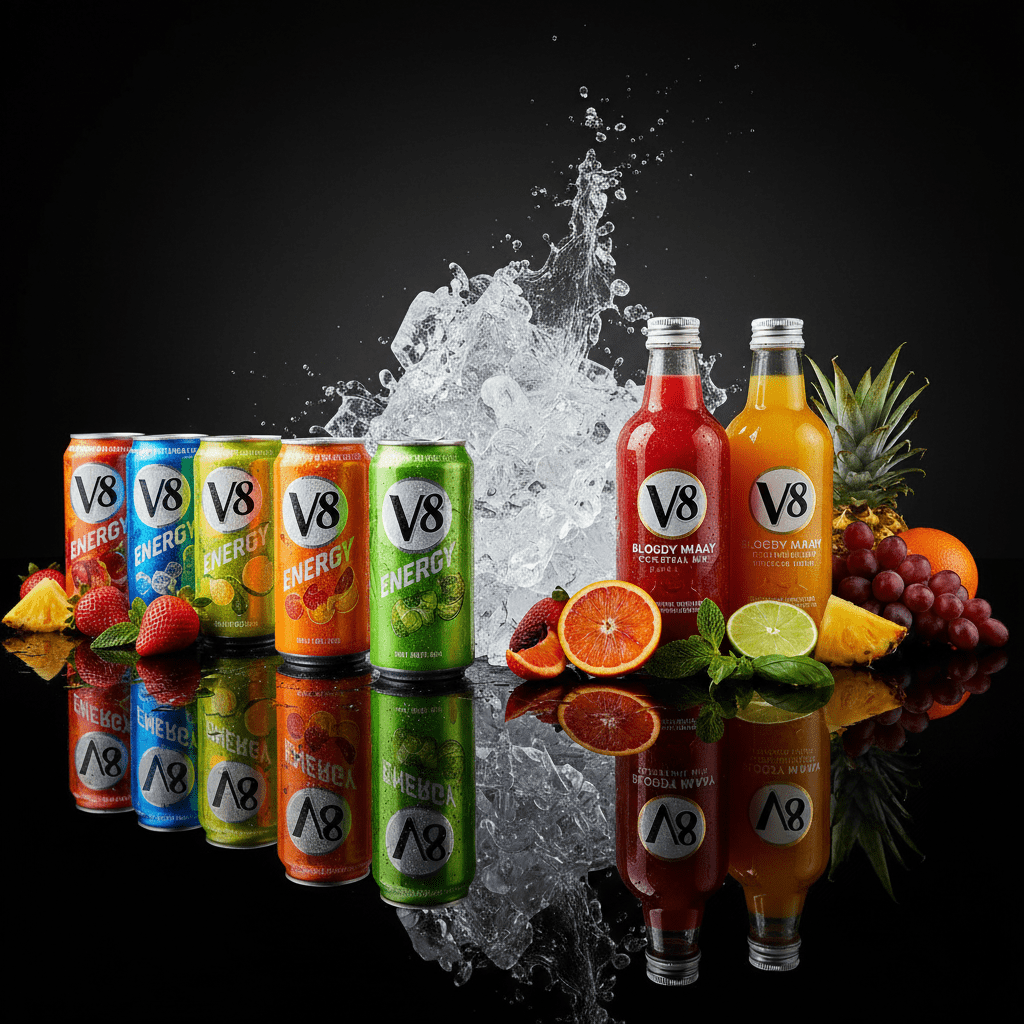
Campbell’s has accelerated V8 innovation to push beyond core vegetable juice into energy drinks and cocktail mixers, aiming to grow V8 into a billion-dollar brand in the next few years. The company, which bought V8 in 1948, has a history of adjacency plays: V8 Energy debuted in 2011 and shelf-stable vegetable-and-fruit offerings rolled out around 2015. Most recently Campbell’s executed two Bloody Mary activations (one in October and another two months later) and has tested trend flavors such as Hot Honey and Spicy. Prabha Cheemalapati, VP of beverages, describes a strategy to “blur category lines” and pursue adjacencies; CEO Mick Beekhuizen has prioritized marketing and innovation resources to support the push.
Key constraint: SOURCE ACCESS DENIED for the original announcement — the company has signaled new 2025 entries, including non-ready-to-drink formats, but has not released definitive caffeine, sugar, ingredient lists, or launch month/market details. For retail approval and merchandising plans you must request full vendor documentation before committing shelf space or promotional dollars.
Transition: With that landscape in mind, here are the exact product and vendor items you should demand to make an informed listing decision.
Product specifications retailers must obtain
Before any internal approval, obtain a complete vendor brief and product fact sheets. Without these you cannot model SKU economics, forecast shelf velocity, or ensure compliance.
Please insist the vendor delivers these data fields for every SKU:
| Required data point | Why it matters |
|---|---|
| Format (RTD can/bottle, concentrate, powdered) | Determines facings, cold vs. ambient adjacency, and refrigeration needs |
| Unit size and pack configuration (single, multi-pack, case) | Impacts shelf depth, shelf price, and case velocity calculations |
| Caffeine per serving and per 100 ml | Regulatory labeling, energy classification, and shopper safety questions |
| Calories and grams of sugar per serving; sweetener type | Nutrition positioning and health-claim impact; affects adjacency to juice/energy |
| Full ingredient list and allergen statements | Label compliance and shopper-facing nutrition calls |
| MSRP, MAP, and suggested trade pricing | Margin modeling, promotional planning, and slotting negotiations |
| UPC/SKU list and GTINs | Required for POS setup, EDI, and store-level forecasting |
| Projected weekly/monthly case volumes by channel | Helps size initial orders and set replenishment cadence |
| Minimum order quantities and lead times | Supply planning and safety-stock calculations to avoid out-of-stocks |
| Planned launch month, test markets, and phased roll-out plan | Enables pilot KPIs and limits national risk exposure |
Transition: Knowing the specs feeds directly into who you’ll stock these for and where they should sit on shelf.
Target consumers and brand positioning
Campbell’s intends to keep V8’s health-minded base while attracting younger drinkers and expanding dayparts (hydration, energy boosts, cocktail occasions). Historically V8 skews older — the brand has been shifting toward younger demos through limited flavors and partnerships — but the brand must clarify positioning for each SKU:
- Energy-positioned SKUs should be benchmarked against mainstream energy players on caffeine mg, functional ingredients, and price-per-serve.
- Mixer-positioned SKUs must be explicit about “suitable for cocktails” claims, sugar content, and whether they are formulated for bartenders (bar pack sizes, concentrate formats) or consumers (RTD cocktail mixers).
Ask the vendor for consumer-test data: primary demo profiles, trial intent, and repeat purchase rates from concept or market tests, plus flavor preference rankings. These metrics are essential to forecast trial velocity and repeat rates and to model potential cannibalization of V8 Red (currently about half of brand sales).
Transition: Positioning drives the GTM plan — here’s how to press the rollout operationally.
Go-to-market and distribution strategy recommendations
Campbell’s public statements suggest tactics like limited-time flavors, co-branded partnerships, and stepped-up marketing. As a retailer, require a specific GTM plan including:
- Exact launch month and phased roll-out: propose a 12-week regional pilot with agreed KPIs (penetration, repeat rate, velocity) before national expansion.
- Channel mix targets: grocery, convenience, club, and on-premise. If mixers are core, include foodservice and craft-bar distribution.
- Promotional mechanics: intro discounts, cooperative funds, sampling budgets, POS assets, and digital ad plans linked to retail promotions.
- Slotting support and suggested facings: vendor to provide recommended shelf adjacency (juice vs. energy vs. mixer) and planograms for both ambient and refrigerated displays.
- Pricing cadence: MAP/MSRP, suggested intro promotional pricing tiers, and trade price to protect margins while driving trial.
Transition: Those GTM elements must be backed by reliable supply and clear contingency plans.
Supply assurance, forecasting and retail risk controls
Retailers should require firm supply assurances to reduce replenishment risk:
- Confirmed manufacturing capacity and production calendar for 2025, including dedicated lines or contingency capacity.
- Minimum order quantities, lead times, and EDI forecast cadence; require weekly or biweekly forecast updates for the first 16 weeks.
- Failure/shortage indemnities, return and case-age policies, and expedited replenishment commitments for high-velocity accounts.
- A documented contingency plan for scale-up if the test market outperforms forecasts, including secondary sourcing or overtime production commitments.
These assurances are a precondition for national rollouts; without them, plan only limited pilots.
Transition: Compliance classification will influence labeling, shelflocation, and legal exposure.
Regulatory and labeling checklist
Energy vs. mixer classification changes label requirements and required warnings. Before POS activation, obtain final label mockups and legal sign-off that confirm:
- Clear caffeine disclosure (mg per serving) and any required warning statements for sensitive groups.
- Ingredient transparency and substantiation for functional claims (e.g., “energy”, “boost”, “hydration”).
- Allergen declarations and country/state-specific labeling compliance.
- If marketed as a cocktail mixer, ensure wording avoids implying alcohol content or pairing that conflicts with regulations; if sold near alcohol displays, confirm store policy alignment.
Transition: Now combine these technical asks into an operational shelf and finance plan.
Shelf strategy, pricing and financial implications
Given V8 Red represents about 50 percent of current brand sales, cautious SKU selection is critical to avoid cannibalization while capturing incremental sales.
Suggested initial retail approach:
- Limit SKUs to 2 to 4 flavors and 1-2 pack formats at launch to minimize shelf clutter and simplify forecasting.
- Use a time-limited or test-market roll-out to measure incremental sales vs. cannibalization of existing V8 SKUs and core energy lines.
- Require the vendor’s forecasted weekly/monthly case rates by channel and negotiate slotting and promotional co-funding tied to velocity milestones.
- Model margin scenarios using vendor-provided trade price, MAP/MSRP, and suggested intro discounts to evaluate ROI on promotional spend and slotting fees.
Retail buyers should ask for vendor-provided cannibalization models or run parallel test stores (control vs. test) during the pilot to quantify net new sales.
Transition: To act on this quickly, here are concrete buyer next steps.
- Obtain the vendor brief and full Nutrition Facts/ingredient lists for every proposed SKU before internal approval.
- Secure samples and run sensory and in-store trial tests across 8 to 12 pilot stores with pre-defined KPIs (penetration, repeat rate, velocity).
- Require a 12-week test-market plan with agreed performance thresholds for national expansion, along with MAP/MSRP and trade pricing.
- Negotiate slotting and promotional support up front: intro discounts, coop funds, sampling budgets, and POS assets.
- Insist on supply assurances: confirmed production calendar, lead times, MOQs, EDI cadence, and contingency plans for scale-up.
- Obtain label mockups and legal sign-off on caffeine disclosures, claims, and classification (energy vs. mixer).
Conclusion
Campbell’s renewed push to stretch V8 into energy and cocktail formats is plausible upside for the brand, but meaningful retail decisions hinge on hard vendor data that was not disclosed publicly. Prioritize receiving a full vendor brief with caffeine, sugar, serving sizes, ingredient lists, SKUs/UPC, MAP/MSRP, launch date(s), channel forecasts, and supply guarantees. Structure any listing as a limited pilot with strict KPIs and negotiated promotional and supply commitments to protect margin and minimize cannibalization risk. With those controls in place, V8’s 2025 innovations could expand occasions and attract new shoppers — but only if you secure the specs and assurances needed to model ROI and shelf impact in advance.
자주하는 질문
V8의 2025년 에너지·칵테일 확장 계획은 구체적으로 무엇인가요?
출시 시점과 소매 준비(런칭·진열·프로모션)는 어떻게 준비해야 하나요?
– 정식 벤더 브리프(런칭월, 테스트 마켓, 단계별 롤아웃 포함)를 요구할 것.
– 초기 국지 파일럿(권장: 12주)과 KPI(침투율, 재구매율, 속도)를 합의하고 파일럿 성과로 전국 확장을 결정할 것.
– 채널별 배분(마트·편의점·클럽·온프레미스)과 믹서가 주요이면 푸드서비스·바 채널 포함을 요구할 것.
– 프로모션·샘플링 예산, POS 자산, 협력 마케팅(공동 광고비) 등을 사전 협상할 것.
– MAP/MSRP·권장 입고가·도매가를 받아 가격 캘린더와 소개 프로모션을 설계할 것.
– 진열 권장(주스·에너지·믹서 중 어디에 배치할지)과 플래노그램을 요청해 냉장/상온 위치를 확정할 것.
소매 바이어가 벤더에게 반드시 받아야 할 필수 자료와 공급 보증은 무엇인가요?
필수 제품·상업 자료
– 포맷(예: RTD 캔/병, 콘센트레이트, 분말)
– 단위 사이즈 및 팩 구성(싱글, 멀티팩, 케이스)
– 서빙당·100ml당 카페인 함량
– 서빙당 칼로리·당(g) 및 감미료 종류
– 전체 성분표 및 알레르기 표기
– MSRP, MAP, 제안 무역가격(Trade price)
– UPC/SKU 리스트와 GTIN
– 채널별 예상 주간/월간 케이스 수량
– 최소주문수량(MOQ) 및 리드타임
– 계획된 출시월·테스트 마켓·단계적 롤아웃 계획
추가 요구사항(리스크 통제)
– 라벨 목업과 법무 합법성 확인(카페인 공시·경고문·기능성 주장 근거)
– 소비자 테스트 데이터(주요 연령층, 시도 의향, 재구매율, 맛 선호 순위)
– 생산능력 확인 및 2025년 생산 캘린더(전용 라인·비상 용량 포함)
– 실패/공급 부족에 대한 보상·반품·케이스 에이지 정책 및 신속 보충 약속
– EDI 예측 주기(초기 16주 주간 또는 격주 업데이트 권장) 및 확장 시 비상 계획
– 판촉·슬로팅 지원 약정(도입할인, coop funds, 샘플링 예산, POS)
이 자료들이 확보되지 않으면 전국 론칭 보다는 제한적 파일럿만 승인하고, 성과 기반으로 확장 결정을 내려야 합니다.